Fertilizing Substrates

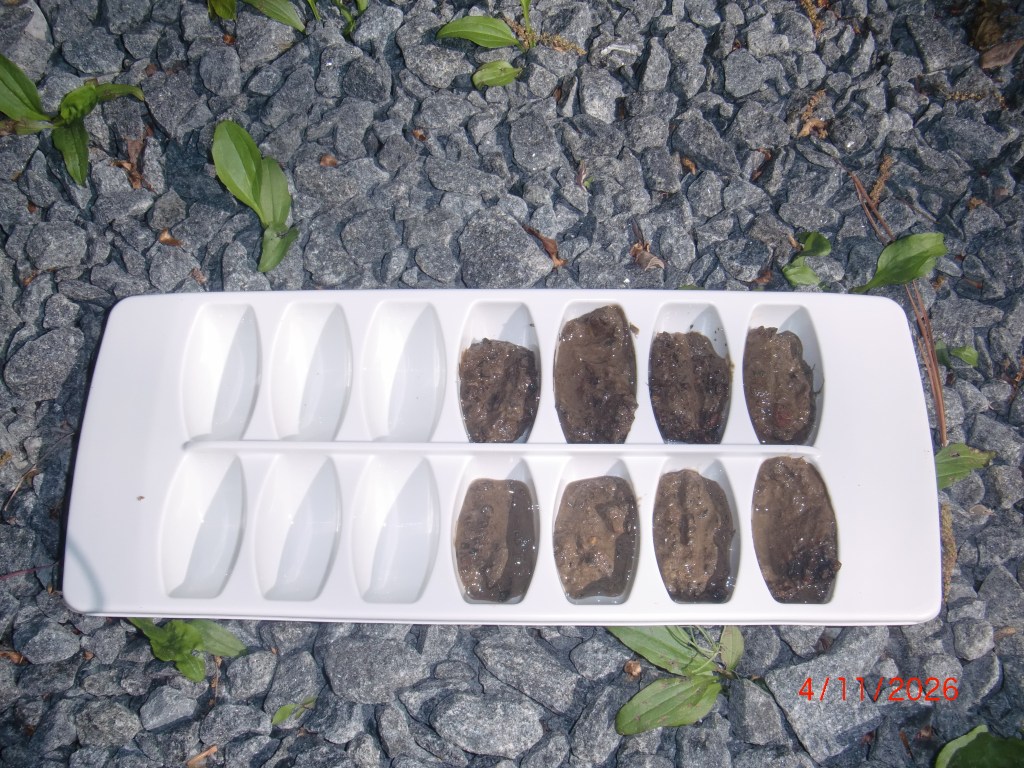
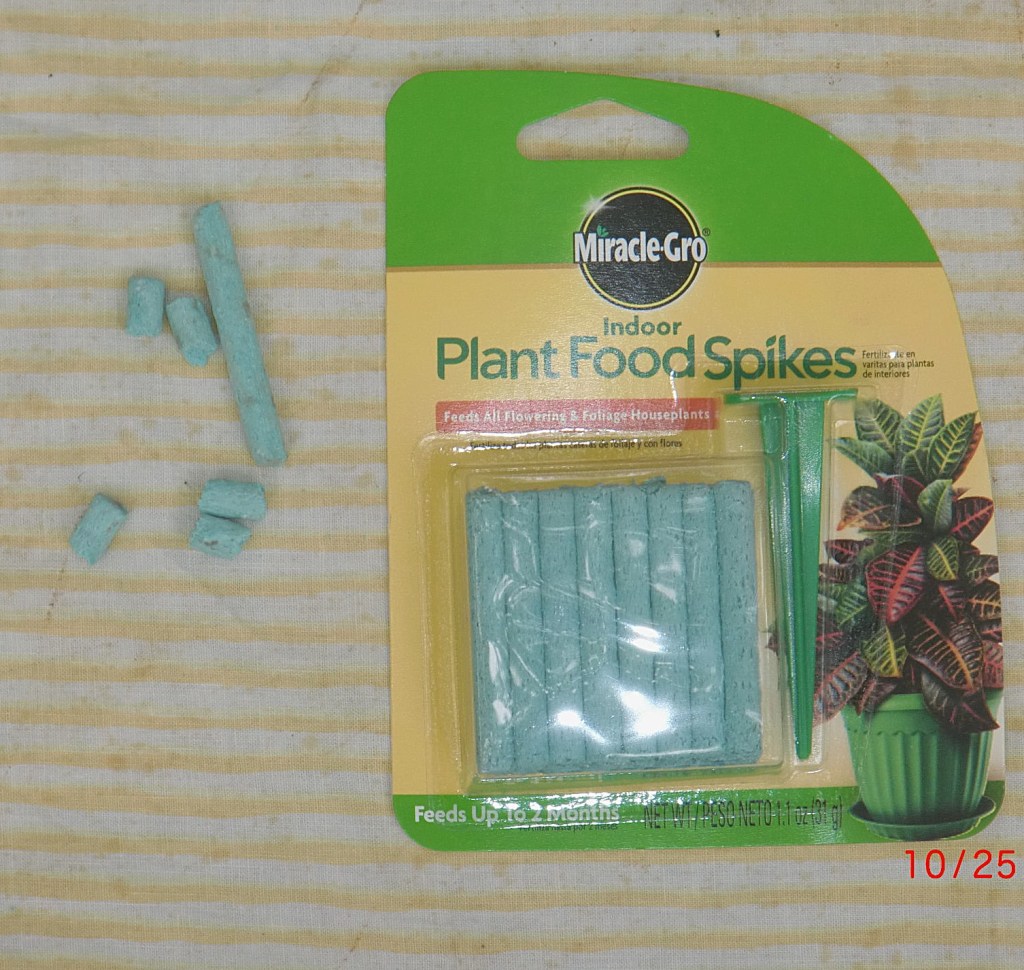
In preparing my tanks for the May 2, 2026 Expo (See previous post), I noticed that the plants in the tank with a potting soil substrate were not growing as enthusiastically as plants in the other tank, which were in garden soil. What to do? Good rooted plant growth is key, and fertilizing the water just encourages algae. Unwilling to tear tank down and put in a new substrate… In a panic, I finally tried something mentioned many years ago on Aquatic Plant Central–insert frozen cubes of soil into the soil underlayer. So I froze cubes of my rich garden soil (Piedmont clay topsoil plus bone meal) and did my best inserting the cubes into the soil before they thawed. For good measure, I also inserted small pieces of 3 houseplant fertilizer sticks. Also replaced rock and attached Anubias nana with the beautiful Red Tiger Lotus. Results encouraging!

Cubes of Wet Garden Soil ready for freezing. I inserted these into a potting soil underlayer in the 10 gal tank where rooted plants were not growing that well.
I also inserted pieces from three of these sticks throughout the potting soil underlayer.
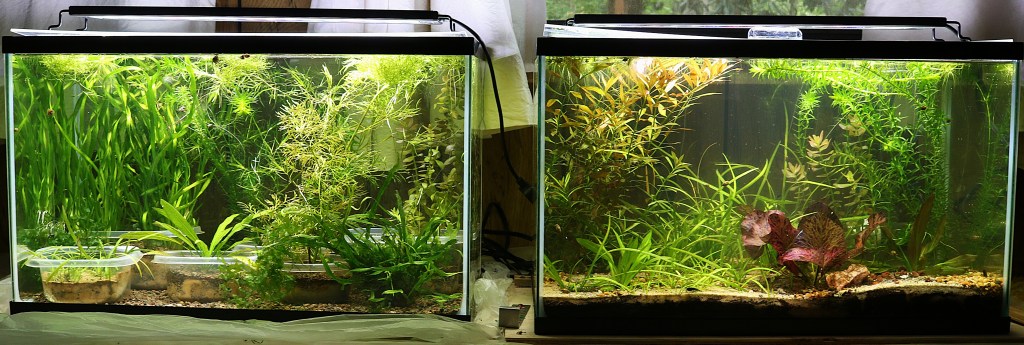
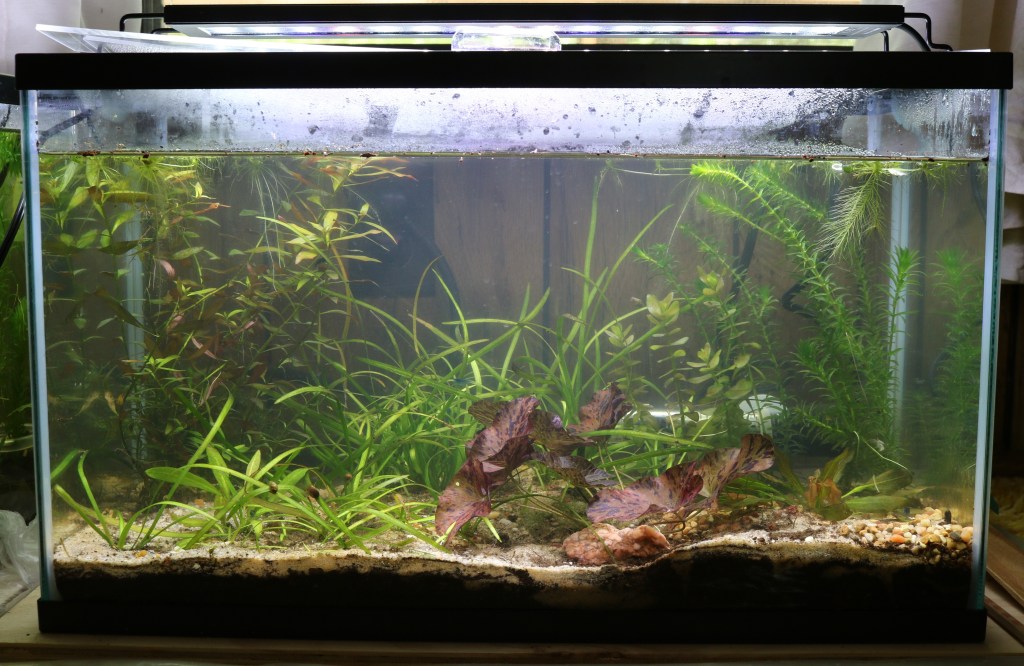
Redo of the Tank with added soil cubes, fertilizer pieces, and a Red Tiger Lotus in the center. Afterwards, a 30% water change and a little washed sand and gravel took care of the substrate disruption. Photo shows tank one day after the redo. It’s fun to play with soil!

BIG Expo Event Coming Up

Sustainable Reefs and I decided on my setting up two 10-gal tanks for their big event in Charlotte, NC on May 2, 2026.  One tank shows the standard ‘Walstad Method’ with a soil underlayer as described in my Ecology of the Planted Aquarium.  The other is described in my article ‘Potted Plants for Breeding Fish,’ which is freely available here on my website.  Hopefully, the plants will get somewhat established to withstand the car ride to Charlotte.  Photos show the progression so far.  Work in progress…  I am awaiting on my local glass cutters to provide the glass lids. 

The Expo organizers are wonderfully dedicated to hobbyist education via their major events, which are attended by 1,000s of people with free tickets provided to schools, universities, home-school organizations, etc.  Events feature both the marine world of beautiful, cultured corals and the freshwater world of fish, shrimp, and plants.  Vendors of all kinds including me and a fish veterinarian! I will have—as I did last year in Raleigh—a table for selling my books.  Only this time I will also have the two tanks and can talk about their setup, plants, and their cost.  Tanks will be auctioned off at the event. 

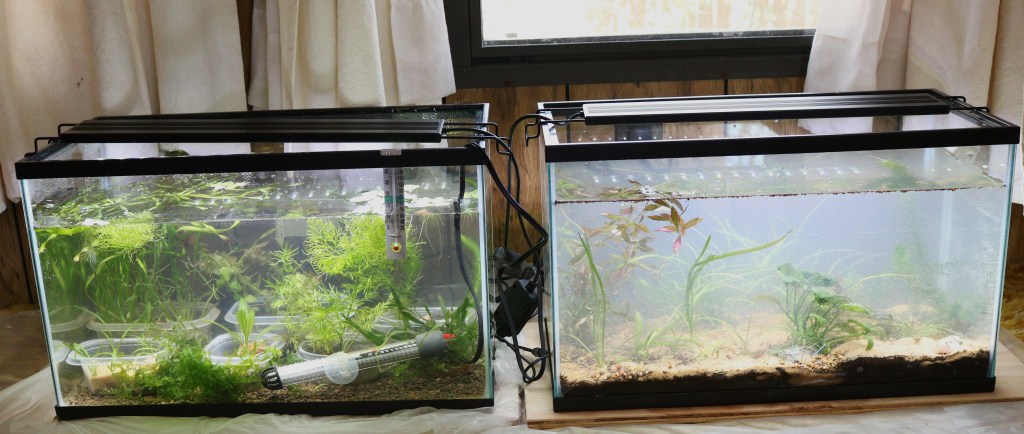
March 29, 2026. Tank (left) for breeding fish set up 2 days ago; ‘Walstad Method’ tank (right) set up just hours ago.
April 4, 2026. Fish breeder tank (left) now contains a few guppies; other tank some Neocaridina shrimp. All plants taken from my other tanks, so they are in the desired submerged form. Counting on them to grow fast!

Hatching Brine Shrimp Eggs–Easy Method

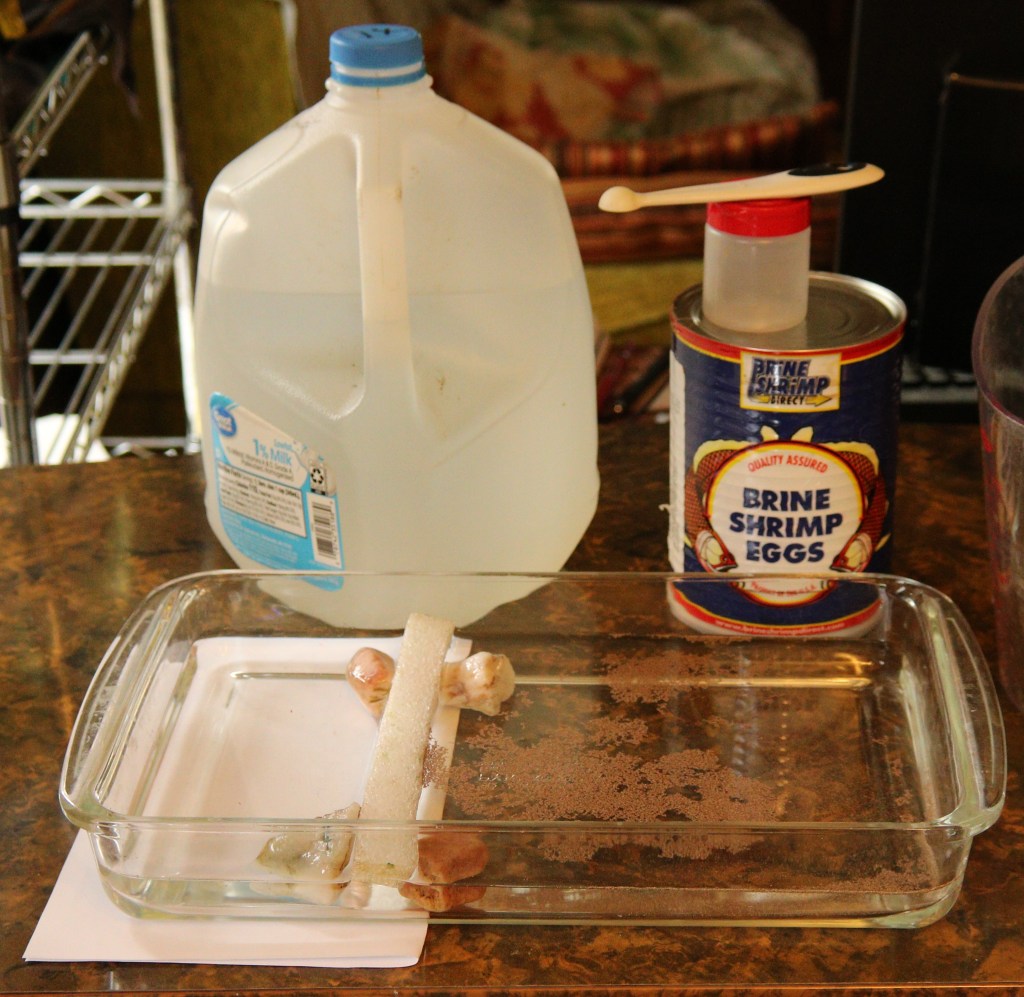
For several years, I have been using my new easy “dish method” for hatching brine shrimp eggs.  No air pumps. No daily saltwater preperation and disposal.  The dish method works perfectly for my small-scale setup–feeding a couple of batches of guppy fry and juveniles. My previous (2020) article ‘Hatching and Culturing Brine Shrimp (Artemia)’ describes various hatching methods.  However, it does not include the dish method, which I had not yet developed.  It is by far the easiest.  Enjoy!

Dish Setup– Eggs stay on right side. After hatching, nauplii will swim to left side.

Florida Talk

My visit to Spring Hill, Florida to give talk for the PASCO aquarium club on July 12, 2025 was a resounding success. Talk was well-received and I sold lots of books. Grant Eder, owner of Garden of Eder, an expert and popular vendor of Neocaridina shrimp, was my gracious host for 2 days. He has a houseful of tanks and a yardful of outdoor tubs (Photo). He took me and his family to visit the Chassahowitzka State Park. There he and his daughter waded through streams to catch fish. (All fish were returned to their homes after photographing.) Lots of fish, including many Mollies (Photo). Meanwhile, I stayed on dry land and kept my shoes dry (Photo). I haven’t been on a plane for over 10 years, so this was a big deal for me!

Grant Eder with a backyard filled with tubs, plants, shrimp, turtles, Koi, etc.

Heavenly, clear water stream in the park filled with all different kinds of small fish, including several schools of Mollies.

Female Molly with crayfish. Male Mollies were few, gorgeous in color–and impossible to catch.

Me visiting the Chassahowitzka State Park in Spring Hill, Florida.