Many aquarium hobbyists breed their fish with little concern about inbreeding’s negative effects on their fishes’ fitness (i.e., survival, reproduction, and disease resistance). Most leaders in the aquarium hobby have dismissed or ignored inbreeding’s negative effects. Inbreeding’s positive effects stemming from selective breeding for desirable traits have gotten all the attention. My new article ‘Inbreeding and Fitness’ incorporates recent scientific discoveries that better document inbreeding’s negative effects and what factors make them worse. As more fish species face extinction—a good part of it driven by inbreeding—I believe this subject will become increasingly relevant to fish-keeping in the aquarium hobby.
Category: Aquarium Articles
Crossing Guppies with Endlers
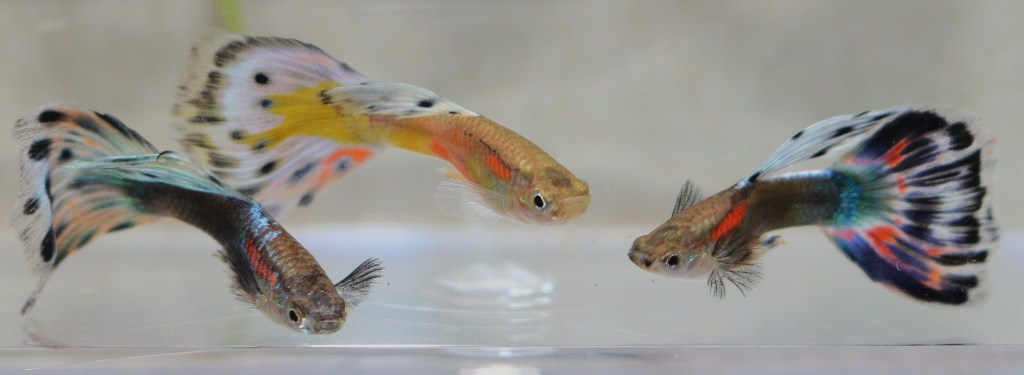
Recently, I crossed my Rainbow guppies with Santa Maria Endlers to increase their fitness. It is too early in this project to report on any fitness improvements. However, I can say that I am delighted with the initial phenotype results. The first generation (50% Rainbow and 50% Endler) produced a mixture of phenotypes but no significant problems; the second generation (75% Rainbow and 25% Endler) produced plenty of gorgeous, Rainbow-type individuals (Figure). Attached article explains the importance of choosing which sex to use for the outcross, “sperm turnover” time, etc. It also discusses inbreeding’s effect on fitness–a sorely neglected subject in the aquarium hobby.
Hatching Brine Shrimp Eggs–Easy Method
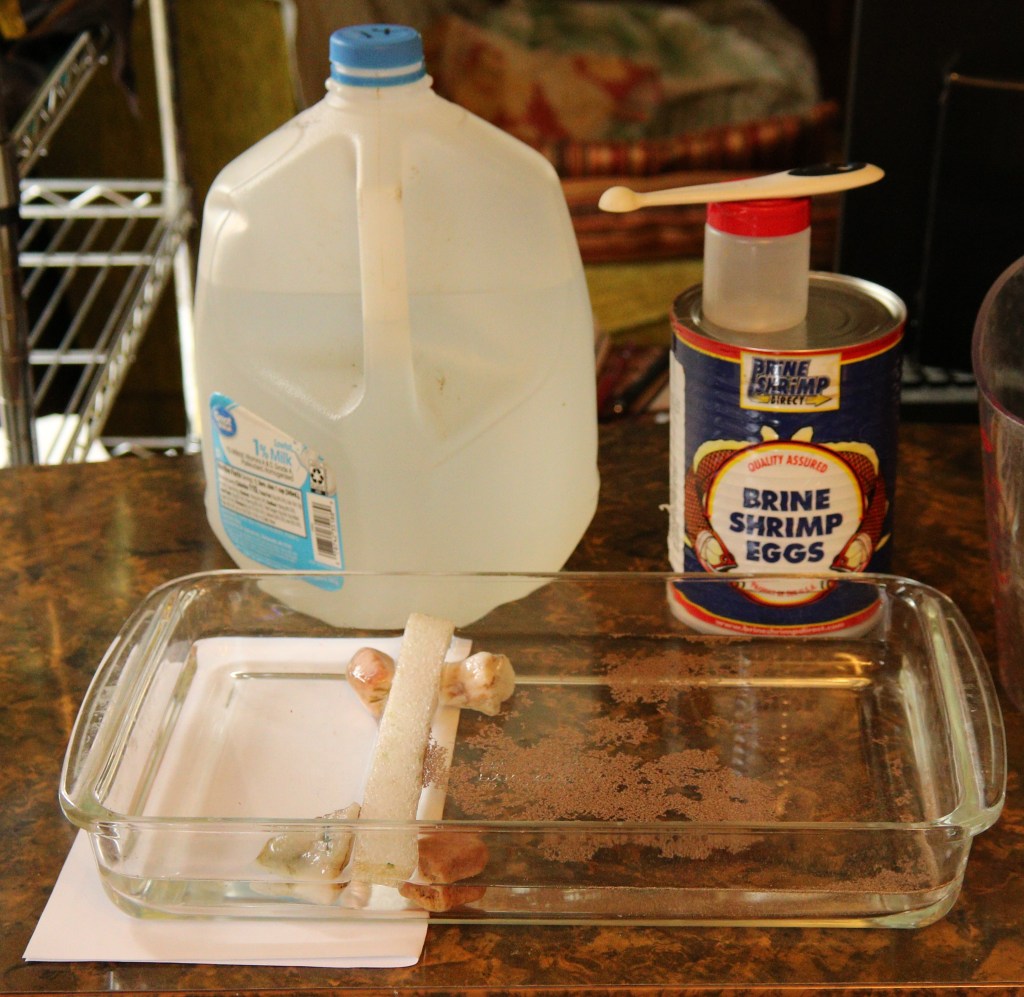
For several years, I have been using my new easy “dish method” for hatching brine shrimp eggs. No air pumps. No daily saltwater preperation and disposal. The dish method works perfectly for my small-scale setup–feeding a couple of batches of guppy fry and juveniles. My previous (2020) article ‘Hatching and Culturing Brine Shrimp (Artemia)’ describes various hatching methods. However, it does not include the dish method, which I had not yet developed. It is by far the easiest. Enjoy!
Video on Small Bowl Setup
Small bowls are a simple, inexpensive way of keeping aquarium plants and moving on to bigger things. A YouTube video (‘The Simplest Planted Aquarium With Diana Walstad’) shows the setup of 1-gal and 5-gal planted bowls. Lisa and John Hudson of KGTropicals (keepfishkeeping.com) made this happen. Video is a fantastic learning piece for those of you rightly intimidated by setting up aquascaped tanks, using soil in aquariums, or maintaining high-tech tanks. Photo shows me and Lisa with our bowls. She’s got the bigger one, but I’ve got three little ones. Not surprisingly, all bowls are doing great since setup!

Potted Plants for Fish Tanks

My new article ‘Potted Plants for Fish Breeding Tanks’ describes maximizing plant growth so that I can keep 10 fish breeding tanks without any filters. Keeping plants “mobile” (i.e., in pots) makes it doable. I measured no NH3, no NO2- and almost no nitrates in the 10 tanks over the course of several months.


